
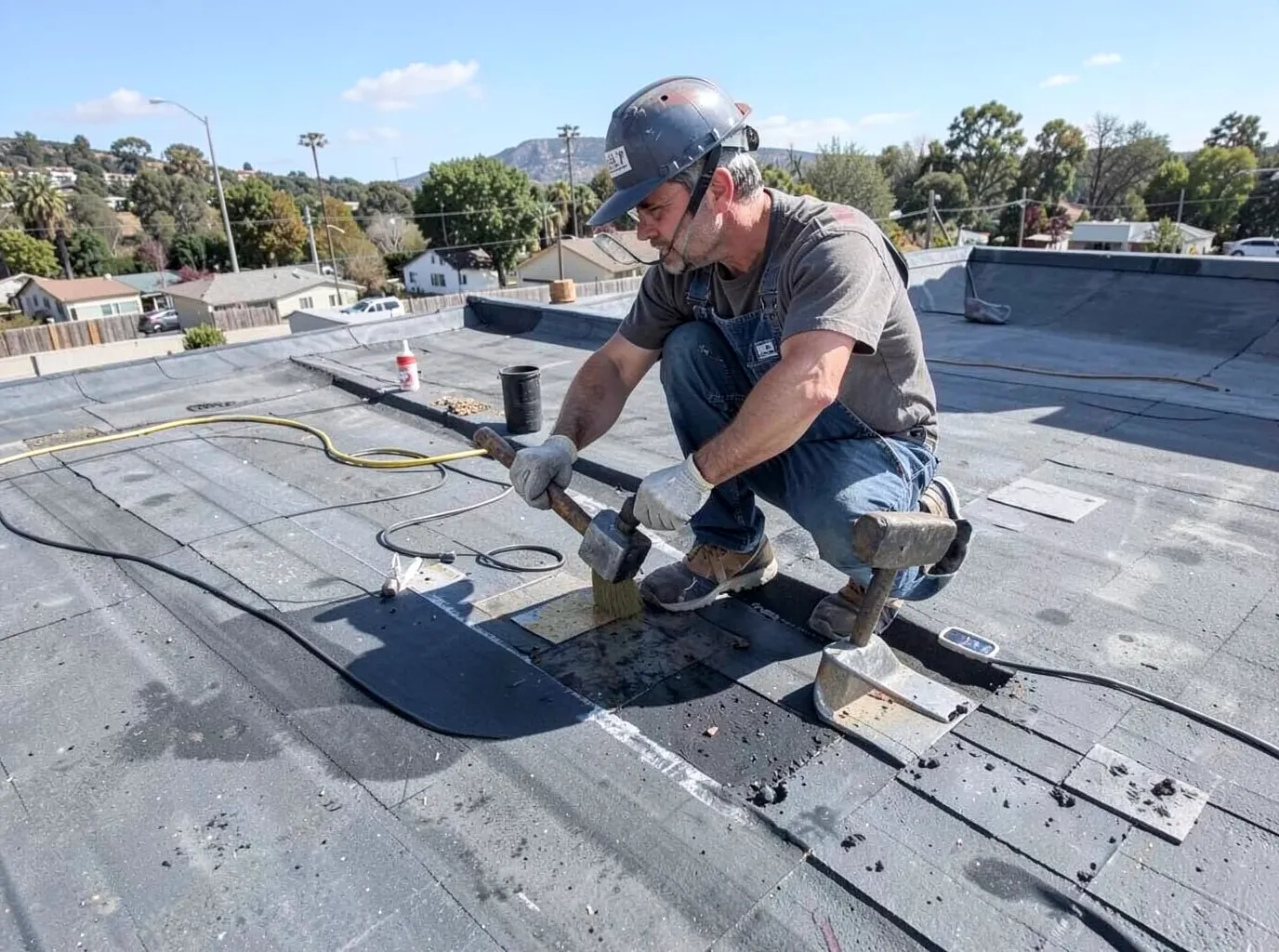
Flat and low-slope roofs in Vista face unique stresses from the mild Mediterranean climate with its long dry summers and occasional winter rains. Modified bitumen and single-ply membranes on homes in Shadowridge and Rancho Buena Vista often develop seam failures and blistering after years of UV exposure. Drainage scuppers and internal drains clog with debris from nearby Alta Vista Botanical Gardens vegetation, allowing water to pond and accelerate membrane breakdown.
Many structures built before the 1990s in Downtown Vista and Vista Village use older built-up roofing that no longer meets current San Diego County code requirements for slope and flashing. Technicians must verify positive drainage and replace deteriorated perimeter flashings where stucco walls meet the roof deck. Edge cases include penetrations around HVAC curbs and skylights that leak only during heavy coastal fog moisture carried inland from Oceanside and Carlsbad.
Repair work requires matching existing membrane types to avoid delamination, especially on commercial buildings near Rancho Guajome Adobe where wind-driven rain from the west can force water under loose laps. Homeowners in San Marcos and Vista often discover leaks only after interior ceiling stains appear because low-slope systems hide moisture until saturation occurs.
Proper repairs include cleaning and priming the substrate, installing compatible reinforcement fabric at seams, and terminating flashings at least eight inches above the roof plane per local guidelines. Skipping these steps leads to repeat callbacks once the next winter rain event hits the region.
Technician insight
In Vista the thing that catches most people out with Flat / Low-Slope Roof Leak Repair is assuming the dry summers protect the roof; UV degradation on TPO and modified bitumen in Shadowridge and Rancho Buena Vista actually sets up seam failures that only appear once winter rains arrive from the coast.
Shadowridge townhome leak
Homeowner noticed ceiling stains after December rains. Inspection revealed ponding at a clogged scupper and failed TPO seam on the low-slope section. We cleared the drain, welded a new seam section with reinforcement, and restored drainage slope. No further leaks occurred during subsequent winter storms.
Flat / Low-Slope Roof Leak Repair Services We Offer
✓TPO Membrane Seam Repair
Heat-weld or adhesive repair of failed TPO seams on low-slope roofs common in newer Shadowridge homes to stop active water intrusion.
✓Modified Bitumen Patch Installation
Torch or cold-process patches over blisters and splits in modified bitumen roofs found throughout Downtown Vista and Vista Village.
✓Drainage Scupper Clearing and Repair
Removal of debris and replacement of damaged scuppers to restore flow on flat roofs serving Rancho Buena Vista properties.
✓Perimeter Flashing Replacement
Removal and reinstallation of deteriorated metal or membrane flashings at walls and edges to meet San Diego County standards.
✓HVAC Curb Leak Sealing
Resealing and reinforcing flashings around rooftop HVAC units that leak during winter rains in Vista and nearby Carlsbad.
✓Skylight Base Flashing Repair
Targeted repair of skylight curb flashings on low-slope roofs in San Marcos and Oceanside border homes.
Flat / Low-Slope Roof Leak Repair Cost in Vista, CA
| Service | Typical Range | What Affects It |
|---|---|---|
| Initial leak inspection and moisture scan | $150–$300 | Larger commercial roofs or multiple leak locations increase cost. |
| TPO seam weld repair | $350–$750 | Depends on linear footage and access difficulty. |
| Modified bitumen patch | $200–$500 | Size of blister or split and membrane thickness affect price. |
| Perimeter flashing replacement | $600–$1,400 | Wall height, material type, and linear feet determine final cost. |
| Drainage scupper repair | $250–$450 | Includes clearing plus any metal or membrane work required. |
Ranges are typical for Vista, CA and confirmed with an exact written quote before any work starts.
How it works
- 1
Site Assessment
Inspect the entire low-slope surface, drains, and flashings for active leaks and underlying damage in Vista neighborhoods.
- 2
Moisture Mapping
Use infrared scanning to locate trapped moisture beneath the membrane before any repair begins.
- 3
Membrane Preparation
Clean, prime, and repair the substrate to ensure new materials bond properly with existing roofing.
- 4
Targeted Repair
Apply patches, weld seams, or replace flashings using compatible products rated for San Diego County conditions.
- 5
Final Drainage Test
Flood test repaired areas and confirm positive flow to scuppers before leaving the job.
Pricing
Pricing varies by roof size, membrane type, and extent of hidden moisture; quotes provided after inspection.